How to Grow an Apple Tree From Seed: Chill, Sprout, Plant, Wait
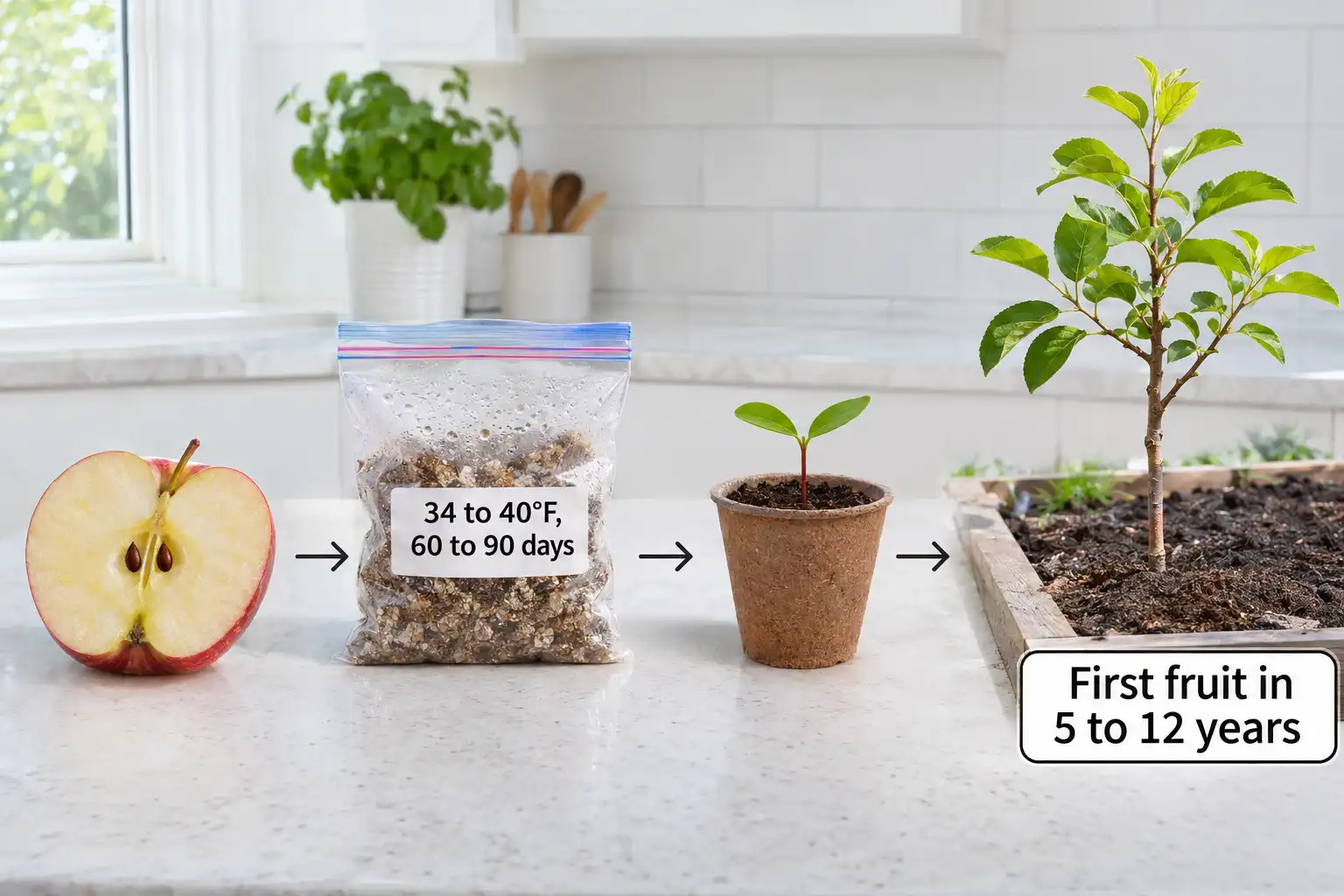
Learning how to grow an apple tree from seed takes one winter of prep and several years of patience. The steps are simple: chill the seeds, sprout them, raise the seedling, and plant it out. The fruit, though, is always a surprise.
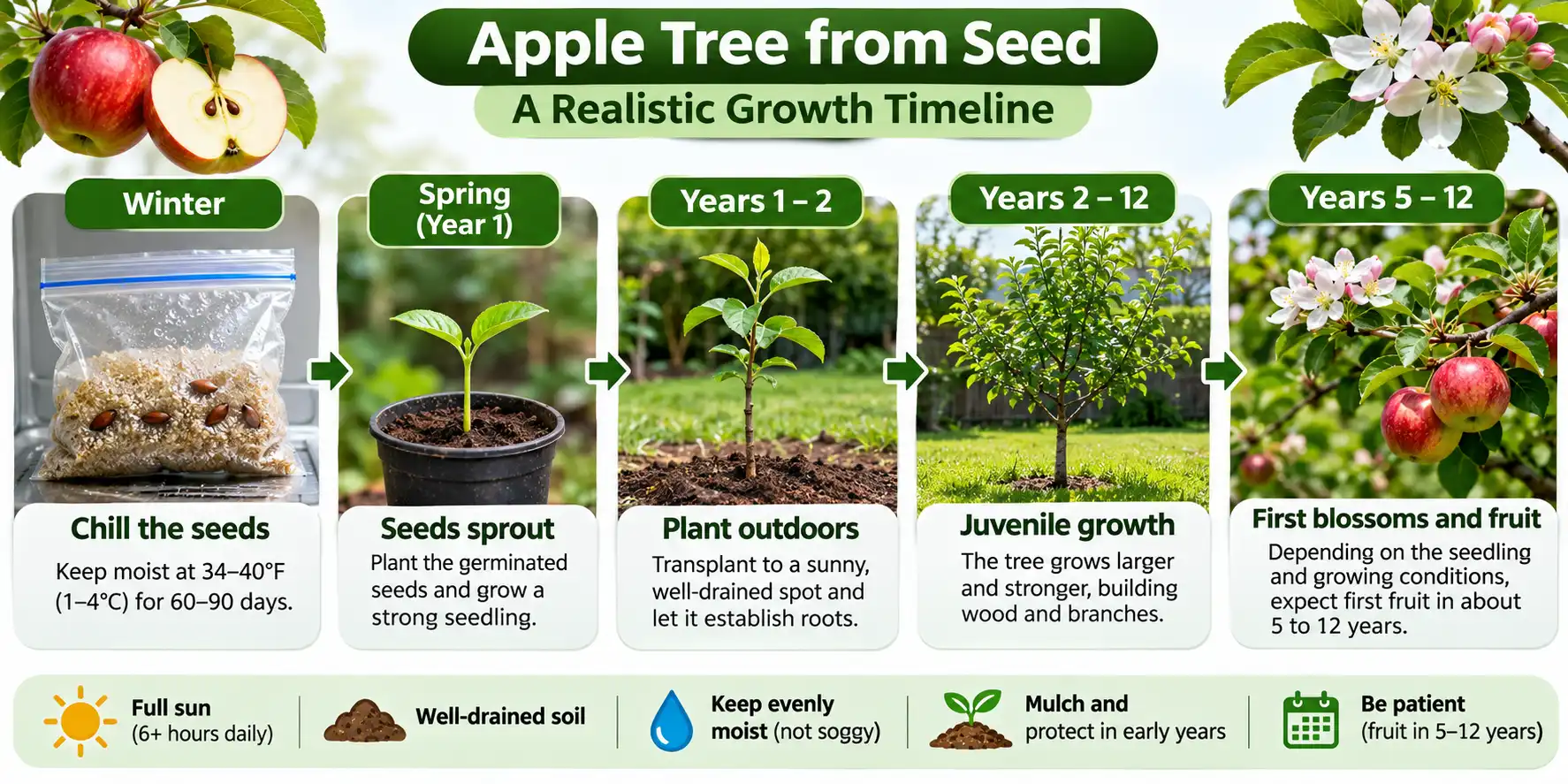
To grow an apple tree from seed, chill moist seeds at 34 to 40°F for 60 to 90 days. That is Oklahoma State Extension’s range. Then pot the sprouts and transplant after spring frost. Expect fruit unlike the parent apple.
Can You Plant Seeds Straight From an Apple?
Yes. You can plant apple seeds straight from an apple, and they will grow. Oklahoma State Extension’s seed propagation fact sheet says to take seeds out once the fruit ripens. Keep them moist, because seeds that dry out too long lose viability.
From there, you have two routes. First, you can sow fresh seeds outdoors in fall and let winter supply the cold. Second, you can store them moist in the refrigerator and sow in spring. Oklahoma State lists both options for apple seed. Fall sowing suits areas with steady cold winters, while the refrigerator gives you control where winters swing warm.
Seeds from a store-bought apple work too. However, the tree won’t match the apple you ate. University of Minnesota Extension notes that apples need a second variety for pollination. It also notes that every apple seed is genetically different. So a Honeycrisp seed grows a new, unnamed apple, not a Honeycrisp.
That isn’t bad news. NMSU Extension says a superior apple from seed is unlikely, but a good-eating apple is reasonably likely.
Learn more: Planting Apple Tree
What Is an Apple Seed, and How Many Seeds Do Apples Have?
An apple seed is a dormant embryo with two parents: the tree that bore the fruit and the tree that supplied the pollen. Because Oklahoma State Extension classes apple seed as dormant, it needs a cold, moist period before it will sprout.
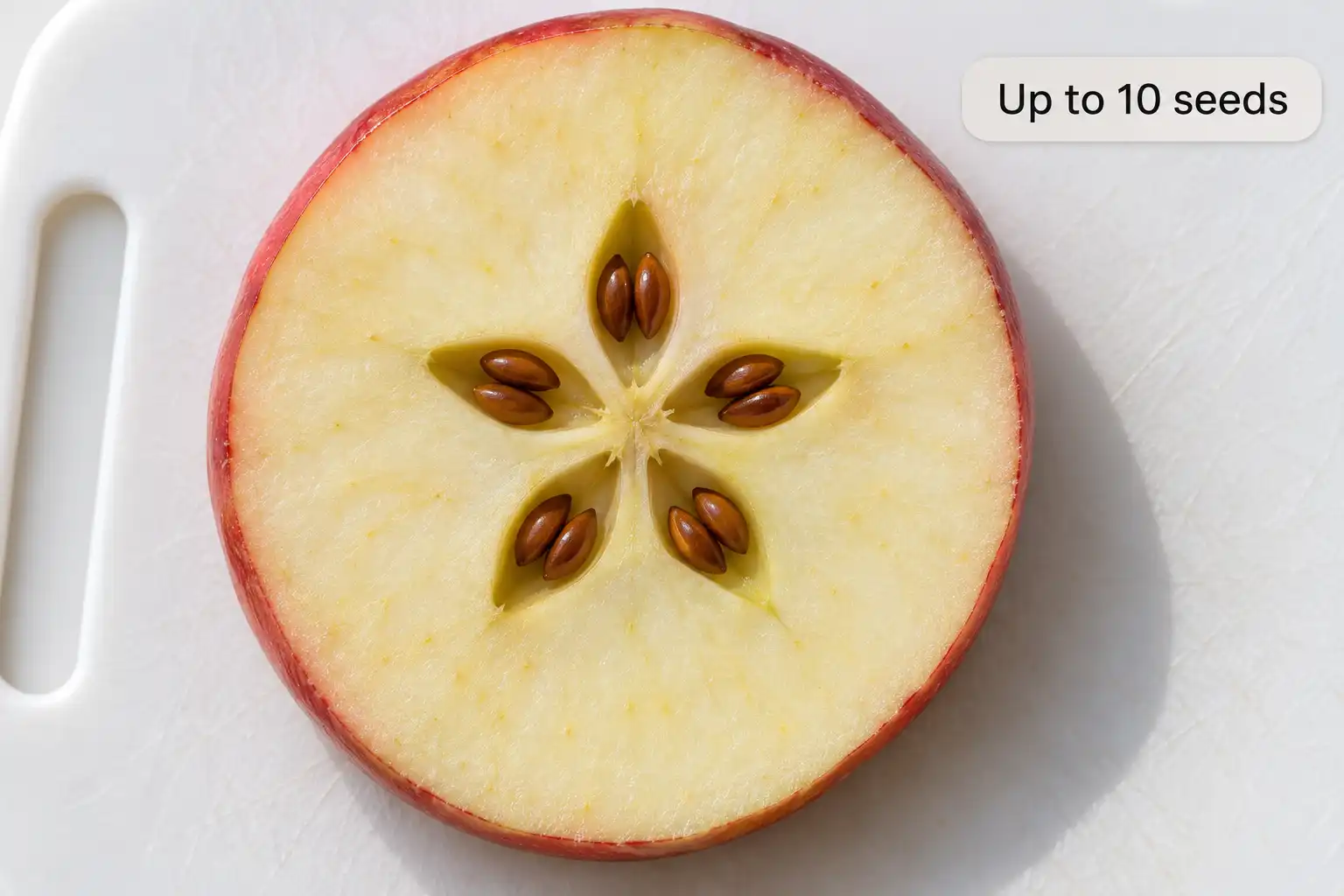
A normal apple holds up to ten seeds. It has five seed chambers, called carpels, and each one holds two seeds. That count comes from a 1917 University of Illinois Agricultural Experiment Station bulletin. It tallied seeds in more than 28,000 apples.
Real apples usually fall short of ten, though. In that study, orchard varieties averaged 7.85 seeds per fruit. Only about 12 percent of large apples held exactly ten. Variety averages ran from 2.8 seeds to just over 15. The bulletin also recorded shriveled seeds that never fully developed.
For you, that means one apple gives several chances. Save every plump seed, since not all of them will sprout.
Do Apple Seeds Need Cold Stratification?
Yes. Apple seeds need cold stratification, a stretch of moist cold that stands in for winter, before they sprout. How long to stratify apple seeds depends on the source, because three extension services print three different ranges.
| Source | Temperature | Chill time |
|---|---|---|
| Oklahoma State Extension | 34 to 40°F | 60 to 90 days |
| NMSU Extension | 35 to 45°F | 4 to 8 weeks |
| NDSU Extension | Refrigerator | 90 to 120 days |
Taken together, the span runs from 4 weeks to 120 days. None of the three explains what drives its number, so we give the full span instead of an average.
In practice, treat the short end as your first check, not your finish line. NMSU Extension says seeds can stay in the refrigerator past 8 weeks unless they start sprouting. NDSU Extension’s Dakota Gardener column runs the chill to 90 to 120 days. So check the seeds at 4 weeks, pot any that have sprouted, and keep chilling the rest.
How to Stratify Apple Seeds in the Refrigerator
These steps follow Oklahoma State Extension’s seed stratification method, with NMSU notes where they help.
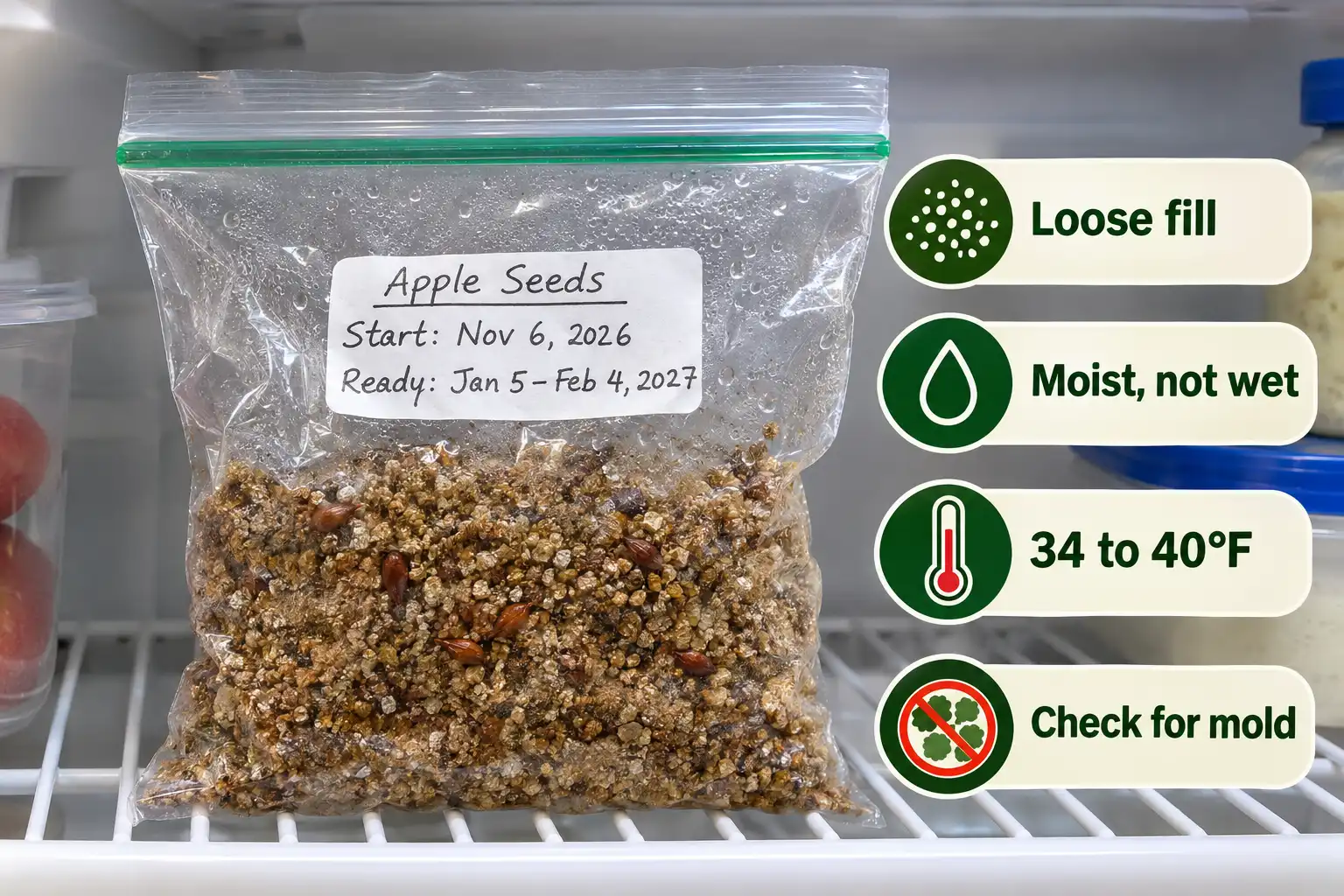
- Collect and rinse the seeds. Take seeds from ripe apples and rinse off the pulp. Keep them damp, because Oklahoma State says long drying costs viability.
- Mix them with a damp medium. Oklahoma State lists moist sand, sawdust, peat moss, or vermiculite. It prefers vermiculite because it is sterile and holds water without cutting off air. NMSU also accepts moistened paper towels.
- Bag the mix loosely. Use a plastic bag or sealable container, and don’t pack it tight, since packing blocks air. Oklahoma State tops the mix with about 1/2 inch of vermiculite to hold moisture.
- Label the bag. Write the date and the apple variety on it. The date tells you when each chill range ends.
- Refrigerate at 34 to 40°F. That is Oklahoma State’s range. Keep the bag away from the freezer.
- Check it regularly. Oklahoma State advises checking that the mix stays moist and free of mold. Re-dampen dry mix, and remove any moldy seeds.
Plan Your Start Date
Count back from the day you want seeds in pots:
Chill start date = potting date minus chill days
For example, say the bag goes in on December 1. NMSU’s 4 to 8 weeks ends between December 29 and January 26. Oklahoma State’s 60 to 90 days ends between January 30 and March 1. NDSU’s 90 to 120 days ends between March 1 and March 31. So a December 1 start puts most sprouts in pots indoors by late winter or early spring, ready for a move outside after frost.
How to Germinate Apple Seeds, and How Long It Takes
Most of the wait is the chill itself, which runs 4 weeks to 120 days depending on the source. After that, extension guidance gives no firm figure for the days from potting to the first leaves. So watch the seeds, not the calendar.
Here is how to move sprouted seeds into pots:
- Look for a white root tip. Seeds can sprout right in the refrigerator. NMSU Extension says that once they sprout, they go into individual pots in sunlight.
- Plant root down, just under the surface. Use fresh potting mix in a pot with drainage holes, and handle the tender root gently.
- Give the sprout strong light. A bright, sunny window or grow lights keep the stem short and sturdy.
- Keep early sprouts indoors. NMSU says seeds that sprout before winter ends must stay inside, where they won’t freeze.
There is also a shortcut. NDSU Extension describes chilling seeds in moist potting soil instead of a bag. Chill a small pot of soil in the refrigerator, and the seeds sprout where they will grow. That skips one transplant.
Seeds that finish their chill without a root can still be potted. Keep the mix moist and the pot warm and bright, and give them time.
How to Grow Apple Seedlings Through the First Season
Apple seedlings need bright light, steady moisture, and a slow move outdoors in their first season.
- Water evenly. Keep the potting mix moist but never soggy. University of Minnesota Extension warns against standing water around apple trees, and a pot with drainage holes prevents it.
- Pot up when roots fill the pot. Move the seedling into a larger, deeper container once roots circle the sides.
- Harden it off. NMSU Extension says potted seedlings can move outdoors in spring, once the risk of freezing has passed. Start with a few hours in a sheltered, lightly shaded spot. Then lengthen the time outside over several days until the seedling handles full sun.
- Give it full sun outdoors. University of Minnesota Extension calls for at least 8 hours of direct sun each day for apple trees.
Also watch the leaves. If they spot, curl, or yellow, several problems can look alike. Your county extension office or a state plant diagnostic lab can identify the cause, and many accept samples.
When and How to Transplant Apple Seedlings
Transplant apple seedlings into the ground after the last spring frost, once they are hardened off. University of Minnesota Extension’s home apple guide is written for Minnesota. It plants potted apple trees in May or June, after the threat of spring frost has passed. Warmer regions reach that point earlier, so go by your local last frost date.
Pick the site first, because a full-size tree is hard to move later. University of Minnesota Extension sets these conditions for apple trees:
- At least 8 hours of direct sun each day
- Soil pH between 6 and 7
- No spot where water stands for several hours after rain
Run a soil test before planting so you know the pH before you dig.
To plant, dig a hole as deep as the pot and a little wider. Set the seedling at the same depth it grew in the pot. Then firm the soil around the roots and water it in. A small seedling can also spend its first summer in a pot outdoors. Plant it in the ground the next spring. The same basics apply to planting a young tree in the ground from a nursery.
Then protect the trunk. University of Minnesota Extension names voles and rabbits as bark chewers. It suggests guards that are white and allow good airflow. White, ventilated tree guards are worth adding the day you plant.
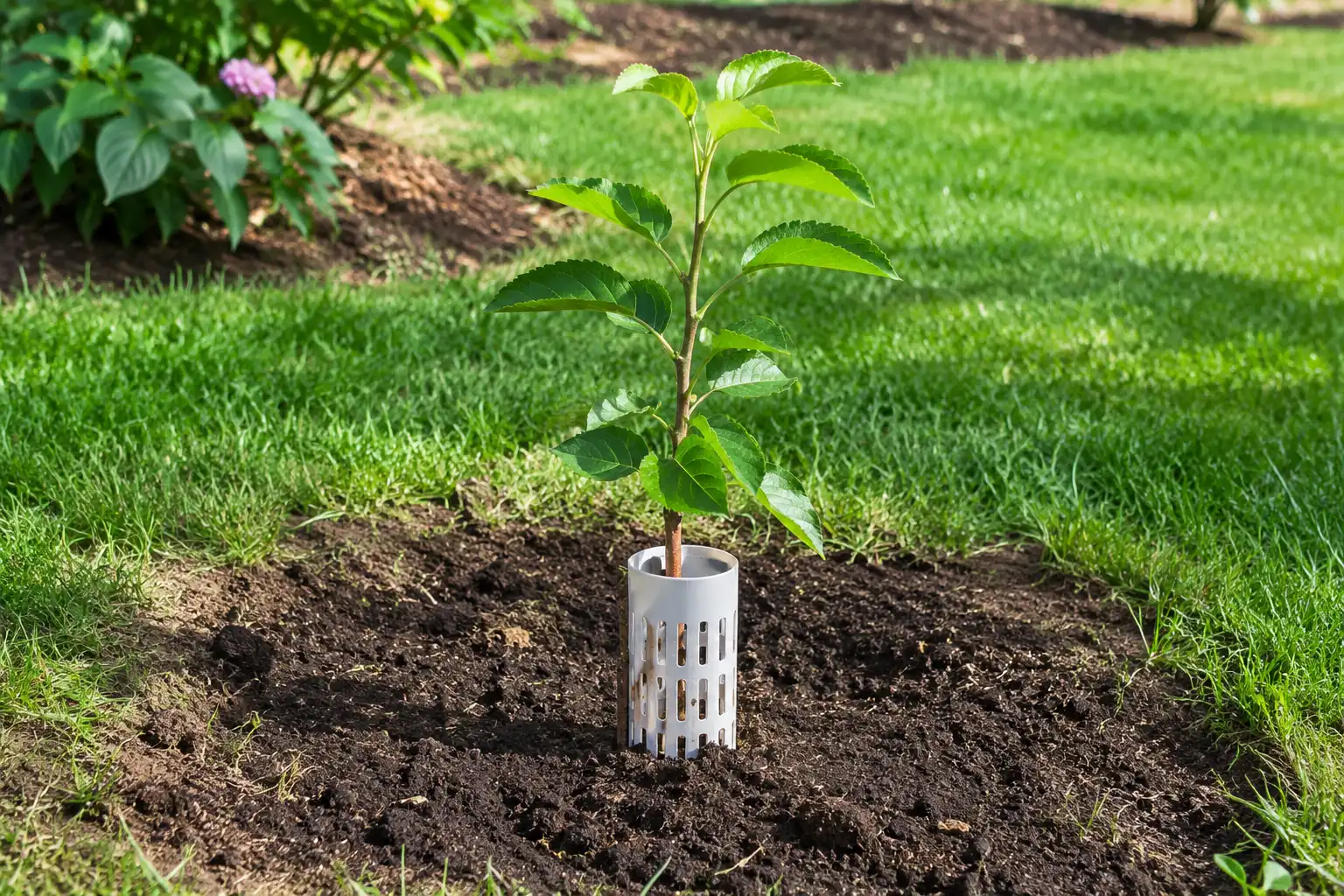
How Much Room a Seed-Grown Apple Needs
A seed-grown apple becomes a full-size tree. University of Minnesota fruit researchers write that unpruned trees on seedling rootstocks reach 30 to 40 feet tall. Their spread is about the same. University of Minnesota Extension spaces standard apple trees 20 to 25 feet apart.
Carry that to your yard:
Space per tree = spacing x spacing
At 20 to 25 feet, each seedling needs 400 to 625 square feet. If you plant three seedlings to raise your odds of one good apple, set aside 1,200 to 1,875 square feet.
Will an Apple Tree Grown From Seed Produce Fruit?
Yes, an apple tree grown from seed will produce fruit, but only after its juvenile phase. That is the stretch of years when a seedling grows but cannot flower.
Sources disagree on how long it lasts. NMSU Extension says the juvenile period in apples may be up to 7 years. Washington State and Michigan State researchers put it at typically 5 to 12 years. Their 2020 paper in the Journal of the American Pomological Society adds that fast, continuous growth may shorten it.
Carry that to your own seedling:
Year of first fruit = sprouting year + juvenile years
Sprout a seed in spring 2027, and NMSU’s figure points to first blooms by about 2034. The 5 to 12 year range spans 2032 to 2039.
Once it blooms, the tree needs pollen. University of Minnesota Extension says apples need two varieties, and one can be a crabapple. The pollen source should sit within about 100 feet. Every seedling is its own variety. So a neighbor’s apple or crabapple can serve if it blooms at the same time. Check pollination partners for apples before the tree’s first bloom, since bloom timing decides which neighbors count.
The research is thin on one point. No published guidance predicts a seedling’s fruit quality or its chill needs before it blooms.
Faster Ways to Get Fruit From an Apple Seedling
Grafting cuts the wait. You have two options, and both keep your seedling useful.
First, graft a branch from the seedling onto a tree that already bears. NMSU Extension says the branch should come from a seedling at least one year old. Grafted onto a fruiting apple tree, it produces apples much sooner. That shows you what your seedling’s apple tastes like years ahead of the seedling itself.
Second, use the seedling as a rootstock. Oklahoma State Extension says apple seeds are mainly grown for rootstocks, then budded or grafted to a known variety. University of Minnesota Extension adds that seedling rootstocks are often grown from McIntosh seed. Their hardiness, anchorage, and soil adaptability are generally excellent. A sharp grafting knife and tape are the main supplies for either job.
If you mainly want apples, compare the two paths before you plant:
| Feature | Seed-grown apple | Grafted dwarf apple |
|---|---|---|
| Time to fruit | 5 to 12 years to first flowers | 2 to 3 years after planting |
| Spacing | 20 to 25 feet | 6 to 10 feet |
| Fruit | Unknown until it bears | Same as the named variety |
The seed-grown time comes from the 2020 pomology study. The dwarf figures and both spacings come from University of Minnesota Extension. If a reliable harvest matters most, choosing a grafted apple tree gets you there years sooner.
Troubleshooting Seed-Grown Apple Trees
Here are the common problems and what to check.
- No sprouts after the chill. The seeds may need more cold. Make sure they stayed moist, and keep chilling them up to NDSU’s 120 days.
- Mold in the bag. Wet, packed mix invites mold. Oklahoma State prefers sterile vermiculite in a loose fill, so toss moldy seeds and re-bag the rest in fresh mix.
- Seeds sprouted in midwinter. Pot them and keep them indoors where they won’t freeze, as NMSU advises.
- Tall, thin, floppy seedlings. Stretched stems point to weak light. Move them to a brighter window or under grow lights.
- Chewed bark near the soil. Voles and rabbits chew apple bark, according to University of Minnesota Extension. Add a white, ventilated guard.
- Spotted, curled, or yellow leaves. Pests, diseases, and weather damage can look alike. Your county extension office or a state plant diagnostic lab can confirm the cause.
- Flowers but no fruit. Check for another apple or crabapple blooming within about 100 feet, University of Minnesota Extension’s pollen distance.
- Years pass with no flowers. The tree may still be juvenile, a phase the 2020 pomology study puts at 5 to 12 years. Also confirm it gets the 8 hours of direct sun University of Minnesota Extension sets.
- Small or sour fruit. That outcome is common with seedlings. Graft a known variety onto the tree, or keep it as a hardy rootstock.
FAQs About How to Grow Apple Seeds
Can I plant seeds from a store-bought apple?
Yes, seeds from a grocery store apple can sprout after a cold, moist chill. The tree will bear a different apple, since University of Minnesota Extension notes that every apple seed is genetically different.
Can apple seeds sprout without stratification?
Plan on giving them the chill, because Oklahoma State Extension classes apple seed as dormant. Its two routes are refrigerated stratification or fall sowing outdoors, where winter supplies the cold.
Should I freeze apple seeds to stratify them?
No, freezing is the wrong kind of cold for stratifying apple seeds. NMSU Extension says to keep them above freezing and below 50°F, and Oklahoma State targets 34 to 40°F.
Can I grow an apple tree from seed indoors?
You can start one indoors, but it won’t stay there. University of Minnesota fruit researchers say unpruned seedling-rootstock trees reach 30 to 40 feet, so plant yours out after frost.
Will a seed from a dwarf apple tree grow a dwarf tree?
No, a seed-grown apple becomes a full-size tree, even if the seed came from a dwarf. University of Minnesota Extension explains that the rootstock sets tree size, and a seed carries none of that dwarfing effect.
Do I need two apple seedlings to get fruit?
No, one seedling can fruit if another apple or crabapple blooms within about 100 feet. University of Minnesota Extension sets that distance, and two seedlings also work, since each seed is unique.
Before You Plant
Start a dated bag of seeds this winter and check it often. Give the seedling full sun, room for a full-size tree, and a pollen partner within 100 feet. If you want a known apple sooner, graft. If you want a new apple of your own, wait it out.